
A Strategic Guide to Controlling IT Costs and Maximizing Value
Everything you need to know about reducing IT costs without sacrificing performance

Table of Contents
INTRODUCTION
For most organizations, IT infrastructure and operations represent one of the largest — and least transparent — areas of spend. Small and mid-sized businesses typically invest between between $10,000 and $49,000 per year on technology, yet many struggle to understand whether that investment is delivering real value.
The issue is visibility. Over time, IT environments grow reactively. Tools accumulate, vendors multiply, processes break down, and ownership becomes unclear. This creates higher costs, inefficiencies, and limited insight into performance.
Effective cost control requires balance. Organizations must manage spending while supporting security, reliability, compliance, and growth. Without structure and expertise, identifying meaningful optimization opportunities becomes difficult.
An experienced managed IT partner like Power Consulting Group brings clarity to this challenge. By introducing structure, visibility, and proven best practices, we help organizations reduce waste and align IT spending with business priorities without sacrificing performance.
IT Department Best Practices
Before addressing cost reduction, it helps to understand where IT budgets are typically spent and why they are difficult to control.
Industry benchmarks highlight key pressures:
Despite these investments, inefficiencies drive unnecessary costs. Disconnected systems, overlapping tools, reactive support, and unclear ownership limit value.
Larger organizations benefit from standardization and scale, while small and mid-sized businesses often pay more per user with less consistency and visibility. Enterprise-level process maturity is possible without expanding internal headcount.
Understanding the Role of IT in Your Organization
Reducing IT costs starts with clarity. Before making changes, organizations need to understand how technology supports daily operations and business goals.
Cross-department conversations often reveal
Redundant or underused tools
Manual processes that could be automated
Inconsistent support experiences
Risk created by informal workarounds
Isolated technology decisions
Viewed together, these issues show where spending misaligns with business needs. This insight helps organizations reduce costs without reducing performance or reliability.
Power Consulting Group guides organizations through this discovery process by combining technical assessments with operational insight.
READY TO GIVE US A TRY?
Most Companies Don’t Know Where They Are Overspending
Comb through invoices, streamline systems, improve the cost-effectiveness of your IT
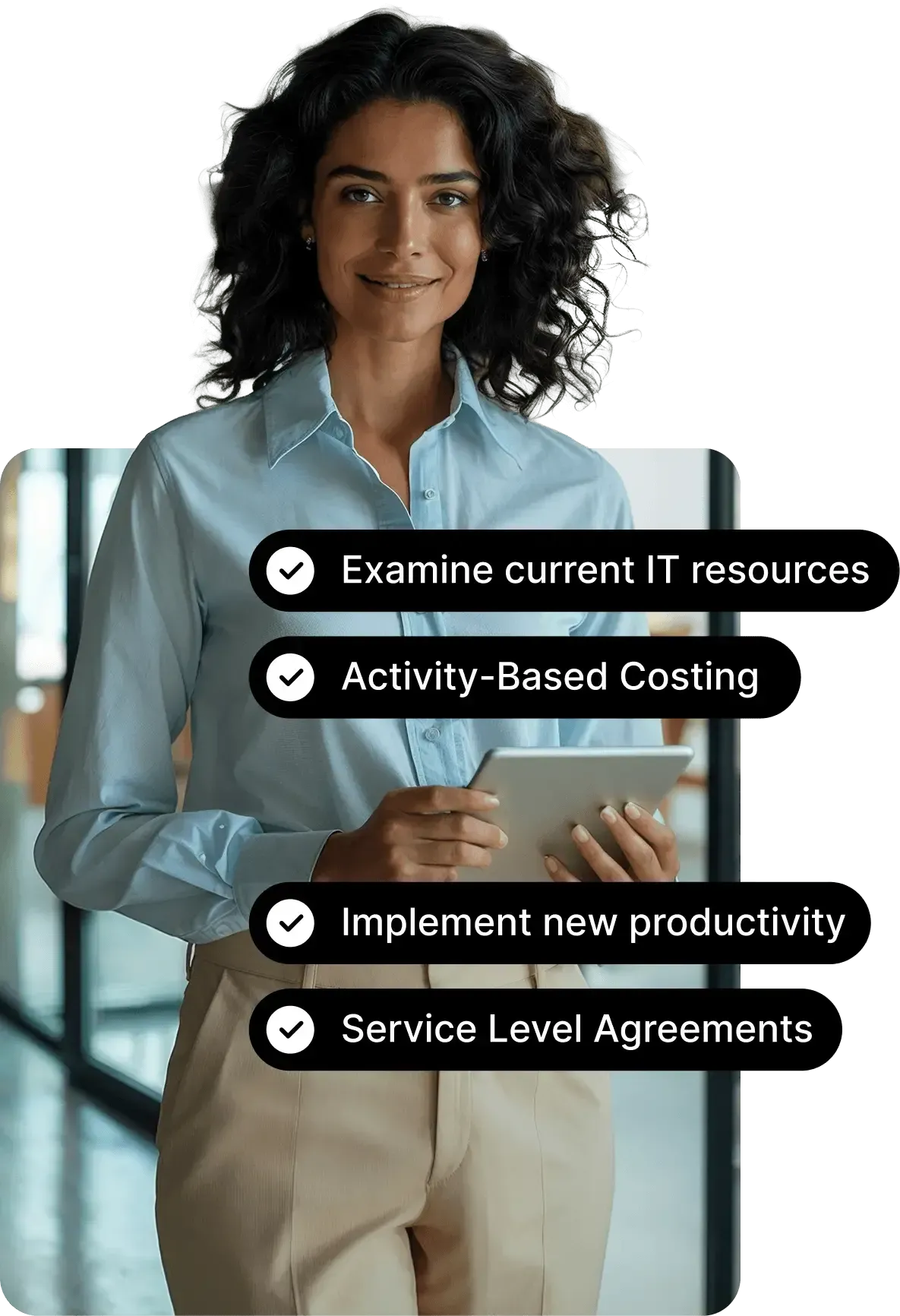
Apply Activity-Based Costing to IT Spend
Traditional IT budgets focus on fixed expenses such as hardware, licenses, and contracts. This approach often hides the true cost of IT operations.
Activity-based costing shifts the focus to daily IT activities. Instead of asking what IT costs, it asks which activities drive those costs.
This approach evaluates work such as user support, vendor coordination, system maintenance, and security tasks. It highlights:
Direct and indirect IT costs
Operational overhead
Business functions tied to technology
The result is clearer insight into which activities deliver value and which consume disproportionate resources.
Activity-based costing works best when paired with broader assessments that account for risk, compliance, and future growth.

Implementing Strong IT Project Management
As organizations grow, technology initiatives span teams, vendors, systems, and timelines. Without structure, projects stall and costs rise.
A disciplined project management approach brings clarity and accountability.
Clear visibility allows teams to course-correct early or stop low-value efforts before they consume more time and budget.
Effective project management helps organizations:
● Prioritize initiatives by impact and risk
● Eliminate redundant projects
● Control scope, timelines, and budgets
● Coordinate vendors and internal stakeholders
● Deliver measurable outcomes
Leveraging Cloud Computing to Reduce Costs and Complexity
Organizations that underuse cloud platforms often carry unnecessary legacy costs.
Cloud environments allow resources to scale based on demand, reducing reliance on over-provisioned infrastructure.
Key advantages include:
1. Lower capital spend on servers
2. Predictable usage-based pricing
3. Built-in availability and scalability
4. Provider-managed maintenance and updates
Cloud adoption shifts routine maintenance away from internal teams so they can focus on higher-value work.

Assessing the True ROI of Your IT Investment
IT rarely generates direct revenue. Its value shows up through reduced risk, stronger productivity, and operational efficiency.
To assess ROI accurately, organizations must look beyond salaries and licenses and evaluate total economic impact. These metrics show whether IT supports or slows the business.
Key indicators include:
● Downtime and outages
● Support volume and frequency
● Employee time lost to IT issues
● Response and resolution speed
● Incidents avoided or reduced
Discover practical strategies to reduce IT costs without compromising performance, security, or growth.
Calculating the True Cost of IT
To understand how much you’re really spending, review these commonly overlooked cost areas.
1. Vendor Management Overhead
Managing multiple IT vendors consumes more time than most organizations expect. Staff often spend hours coordinating providers, resolving issues, and handling renewals.
What to include:
- Time spent per vendor
- Number of vendors
- Staff involved and hourly cost
2. Internal IT Labor Costs
Employees often handle IT tasks outside their primary roles. This pulls time away from revenue-generating work.
What to include:
- Hours spent on IT tasks
- Average hourly wage of involved staff
These metrics show the real cost of internal effort beyond formal IT roles.
3. Cost of Downtime and Lost Productivity
Downtime impacts both productivity and revenue. This metric includes the true cost of lost work during outages or slowdowns. Even short disruptions affect many employees at once.
What to include:
- Hours of downtime
- Number of affected employees
- Average hourly wage
4. Infrastructure, Software, and Support Costs
Recurring technology expenses add up quickly and are often spread across budgets.These costs form the baseline of ongoing IT spending.
What to include:
- Hardware maintenance and replacement
- Software licensing and renewals
- Security tools and subscriptions
- Backup, monitoring, and support services

The Total Cost of IT
When combined, these factors reveal the full picture of your IT investment:
Total cost includes:
Fixed IT expenses
Lost productivity
Lost revenue
Internal time spent on IT tasks
Vendor management effort
Only with this full view can organizations compare internal IT to managed services accurately.

Hidden Labor Costs That Inflate IT Budgets
Labor costs often drain IT budgets more than tools or licenses.
Overtime and After-Hours Support
Unplanned incidents drive overtime, increase burnout, and pull staff away from core work.
Training and Skill Development
Ongoing education in cloud, compliance, and cybersecurity adds cost and reduces productive hours.
Recruiting and Talent Acquisition
Hiring qualified IT staff requires time, money, and ongoing retention effort.
A managed IT model stabilizes costs and reduces reliance on individual employees.
Start Transforming Your IT from a Cost Center into a Strategic Advantage
Reducing IT costs means spending with intent. Organizations that succeed gain visibility, eliminate waste, and align technology to business goals.
Small and mid-sized organizations often struggle to achieve this internally due to fragmented systems and hidden labor costs.
This is where an experienced managed IT provider makes a measurable difference.
How Power Consulting Saves You Money
Our approach focuses on:
Clear visibility into total IT cost
Standardized tools and processes
Predictable and controlled budgeting
Integrated security and monitoring
Access to senior expertise without added headcount
Strategic guidance beyond day-to-day support
The Result
Lower total IT cost
Fewer disruptions
Faster issue resolution
Improved compliance readiness
Stronger alignment between IT and business goals
Power Consulting
Headquarters
127 W 26th St 8th floor, New York, NY 10001
Call Us
(212) 647-0377


